Table 9 · Developed project · Thursday
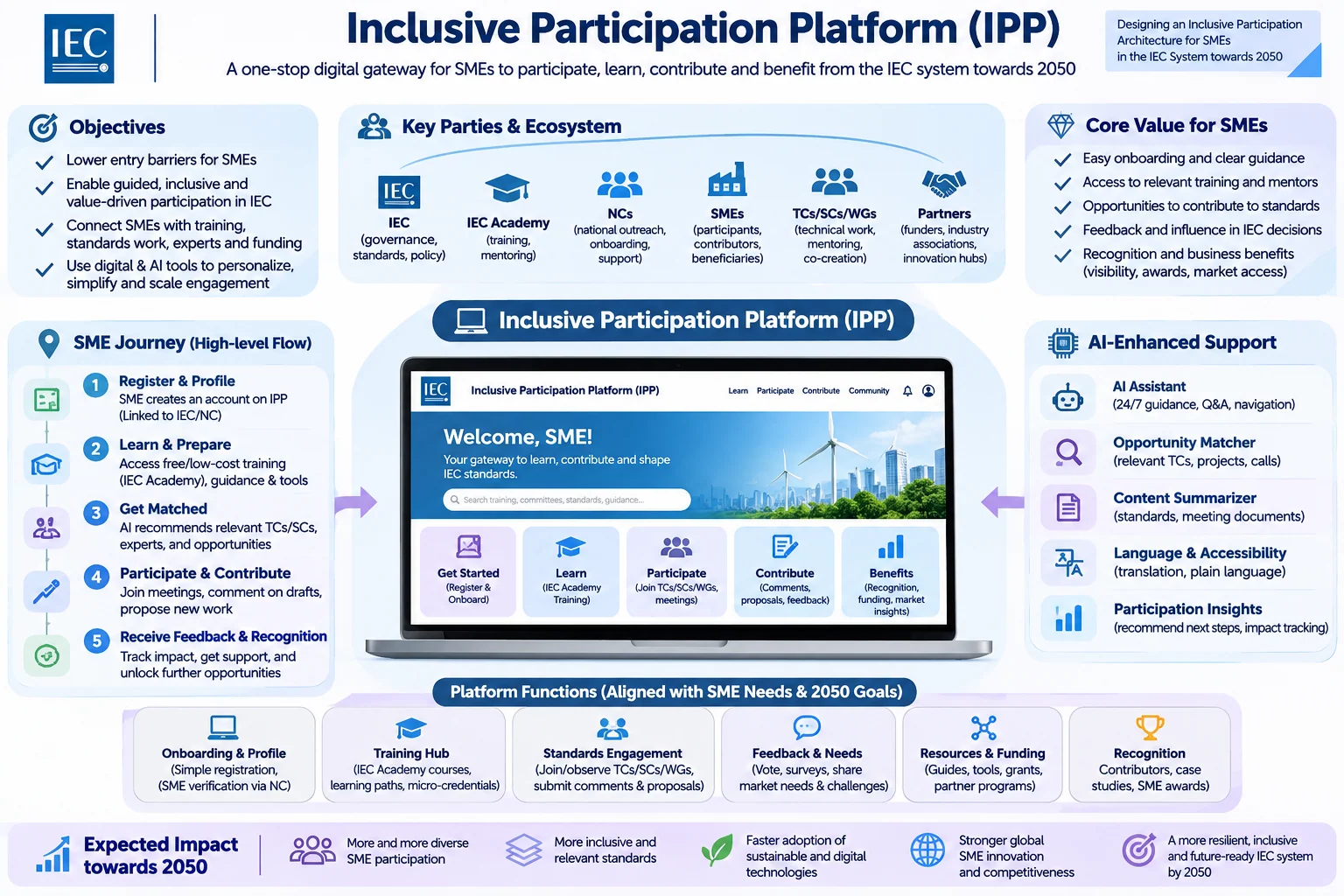
Inclusive Participation Platform
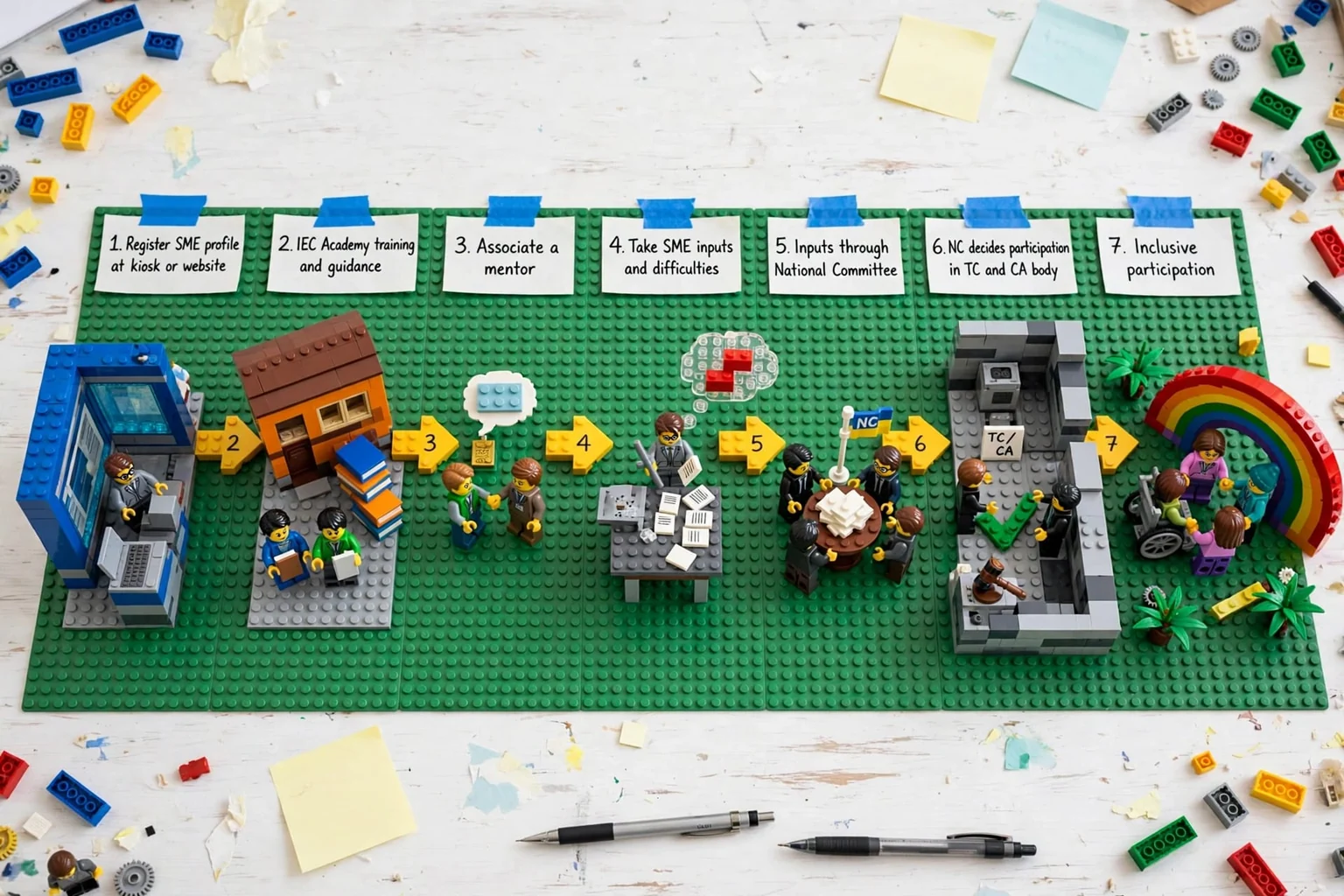
A small business spots a problem while using a standard. On the proposed platform it could register its interests, find training or a mentor, submit the issue and receive a response. The team developed two routes to review, directly through a technical group or through the firm’s National Committee and mirror committee.
What the team learned
A reviewer was unsure a small firm would pay for a subscription.
Wednesday · 18 November
Three early concepts
The group tried a subscription with clause-level feedback, open input before formal onboarding, and a registration and mentoring route.
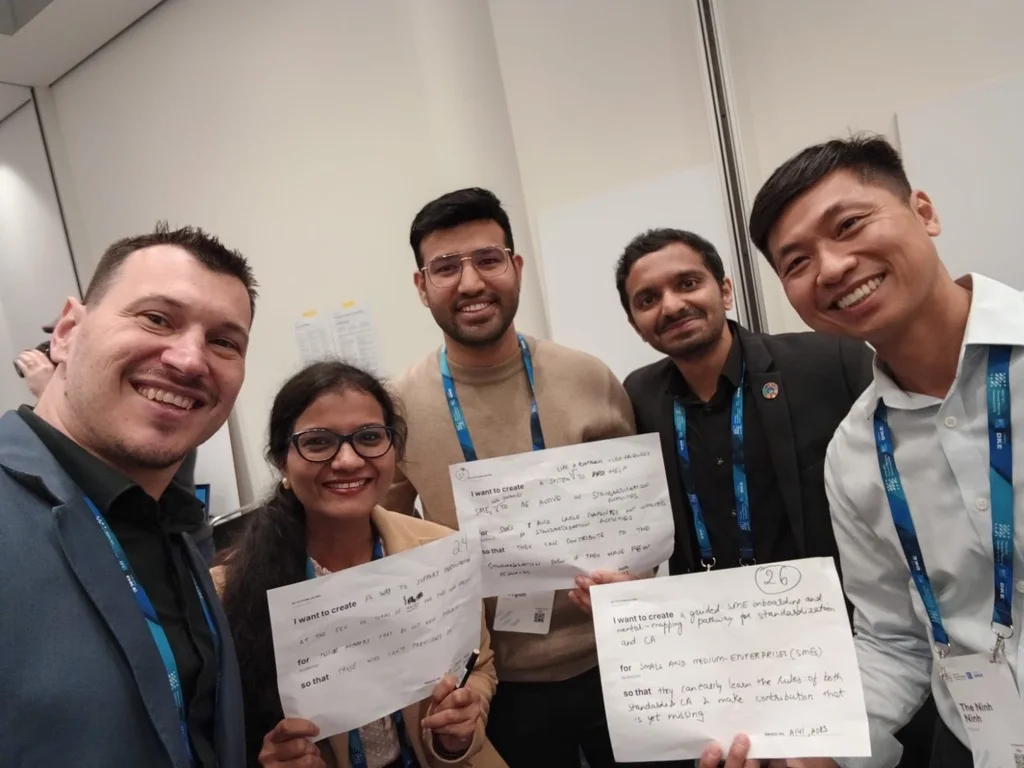
Archive ID 01.1
Subscription and clause feedback
Give standards users a way to propose changes while they are reading. Small firms and individual specialists who encounter problems applying IEC or IECEx standards may have no obvious route to put evidence in front of the people who maintain the text. The proposal makes a contribution part of the reading experience.
How the concept could work
- Subscribe to the standards platform and open the relevant standard and clause.
- See the current wording, draft an alternative and submit it to the responsible committee.
- Receive a reason if declined, a reward if accepted, or an invitation to explain the issue in a paid committee contribution.
Feedback and discussion
A reviewer saw potential for wider participation and was unsure what they would pay. The trial app explored a badge after rejection. The team’s pitch promised a reasoned reply and left the reward open.
Discussion question
Can a subscription make clause feedback accessible to the small firms the team wants to reach, and who would fund and administer payments?
Archive ID 01.2
Open input before onboarding
Let small firms and individuals raise a practical issue before entering the formal IEC process. People who install, build and maintain equipment may have useful evidence without a committee role. This proposal gives them an IEC-level entry point while keeping National Committees involved in formal participation.
How the concept could work
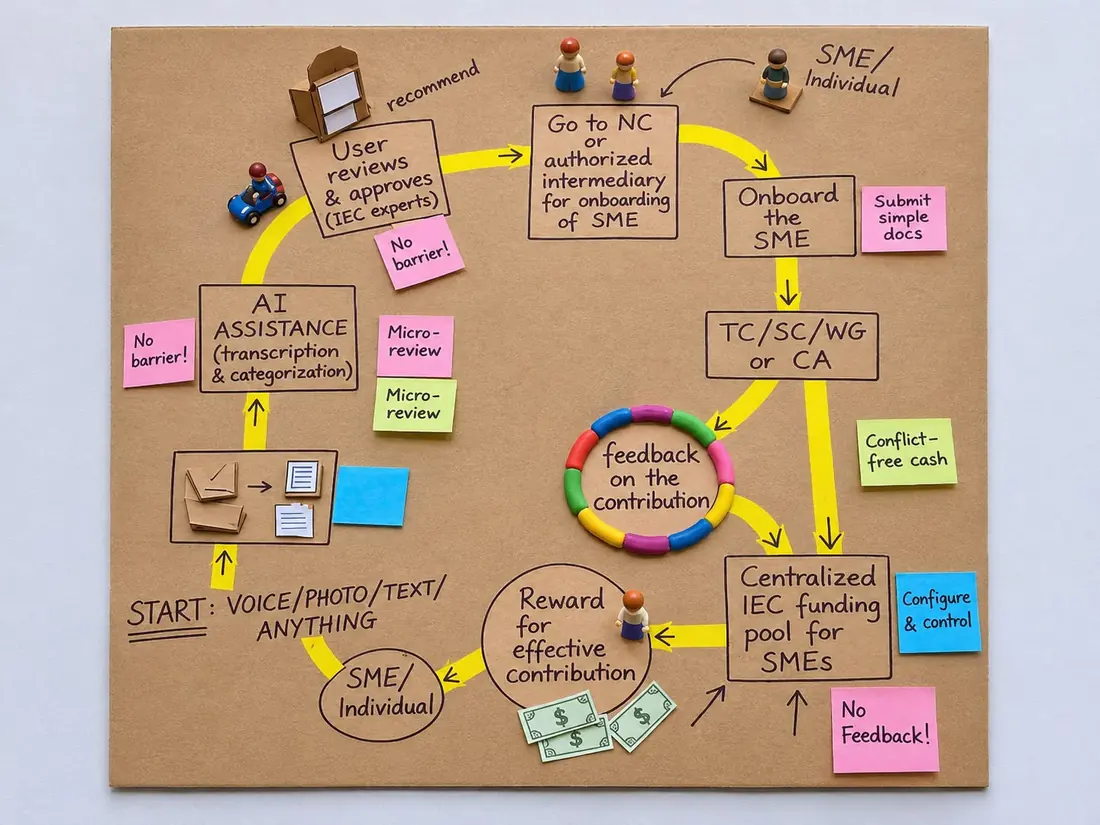
- Accept text, photos or voice notes from anyone with an issue to raise.
- Use AI to group submissions and flag promising ones for human review, then refer selected input to the National Committee.
- Have the National Committee onboard contributors into technical committees, subcommittees or working groups when appropriate, and offer feedback and support from a central IEC pool.
Feedback and discussion
The board mock-up shows a technical review before referral and a loop back to the contributor. Testing pointed to the need to manage the load on National Committees and help SMEs cover participation costs. One reviewer suggested funding travel before adding extra awards.
Discussion question
What should a human reviewer look for before referral, and how would contributors get a response when an issue is declined?
Archive ID 01.3
Register, learn and find a mentor
Help smaller firms take a technical concern through the committee route with guidance. Smaller firms may know where a standard fails in practice and still lack the time, contacts or procedural knowledge to raise it. This proposal begins with registration and builds the capability to contribute.
How the concept could work
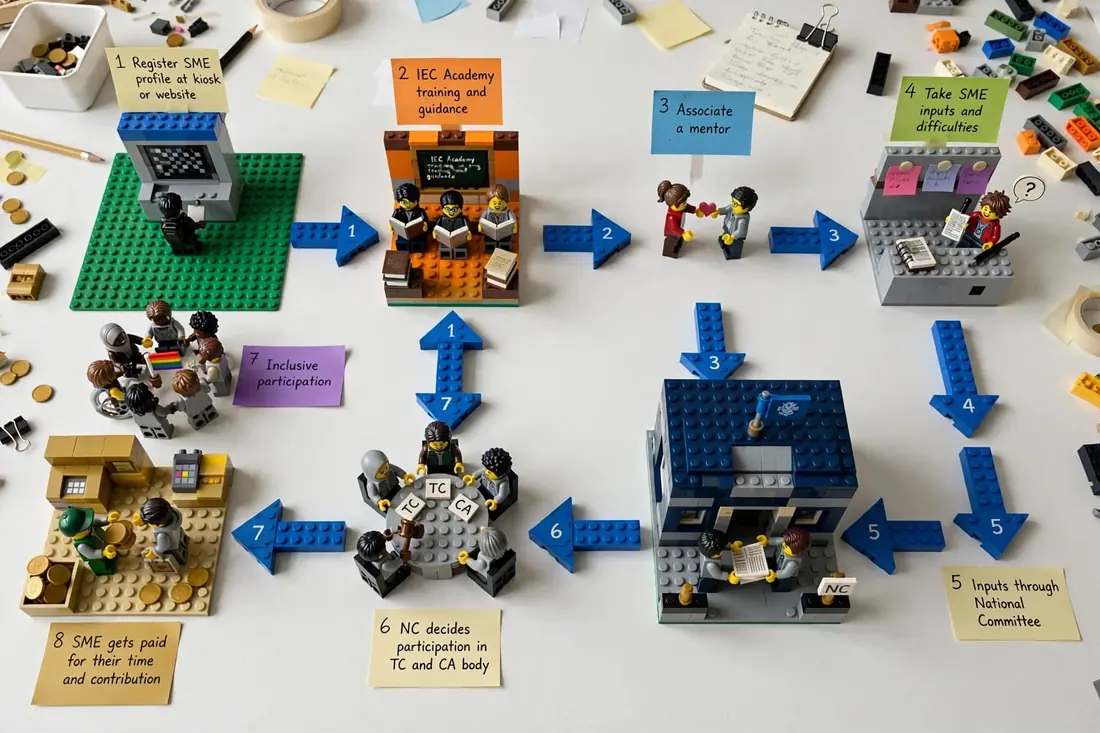
- Register with the IEC or National Committee, complete introductory training and connect with a mentor in the relevant field.
- Work with the mentor to formulate a problem and bring it to the national mirror committee.
- With national support, escalate to the international technical committee. The presentation proposes paying the SME if its change is accepted.
Feedback and discussion
The physical model shows registration, IEC Academy learning, mentor matching and National Committee consideration. In testing, a reviewer warned that a single busy mentor could recreate the access problem and suggested a network of experienced people. The final pitch retained a named mentor.
Discussion question
How could a mentoring network provide timely responses while one person remains responsible for each contribution?
Thursday · 19 November
Testing and revisions
What the team heard
A reviewer was unsure a small firm would pay for a subscription. Others pointed to the cost of taking part and the risk that a busy mentor would become another barrier. A network of experienced people and help with travel were suggested.
What changed
The Thursday proposal included free introductory training and mentoring, returning decisions to contributors and categorising comments before technical review. The team left concessional access, recognition and funding open for further work.
Another view of the prototype
Questions still open
Which submissions should take each route, who checks the categorisation and who owns the reply to the contributor?
Friday · 20 November