World Café · Tuesday 17 November
Eight perspectives
Seven tables opened with research and participant cards. At Station 8, two historical journeys ran along the corridor wall between the doors to the Lab.
-

Station 1 · Table
Value and Gaps
Where do standardization and conformity assessment make a difference today—and where do they fall short? How do people and organizations come to obtain—or fail to obtain—value from standards and conformity assessment?
-

Station 2 · Table
Signals of Change
What is changing around us that could challenge today’s approaches? How do standardization and assurance practices change when technologies, markets or societal expectations change?
-

Station 3 · Table
Participation and Motivation
What is the experience of contributing? What shapes people’s willingness to participate? How do people enter, influence, remain in and leave communities that develop standards or provide assurance?
-
Station 4 · Table
Structures and Decisions
How do organizational structures help or hinder a timely, credible response? How do groups reach, contest and revise collective decisions under changing conditions?
-

Station 5 · Table
Experiments and Inspiration
What can we learn from approaches already being tried? How do experiments and alternative practices generate learning and influence wider organizational change?
-

Station 6 · Table
Trust and Trust Infrastructure
How do people, teams and organizations build, sustain, question and repair trust in themselves and their products and services, and what arrangements make that trust possible?
-
Station 7 · Table
Organisational Capacity for Change
How are organisations building and sustaining the ability to recognise, initiate and respond to different kinds of change, and what explains where these approaches help, struggle or fail?
-
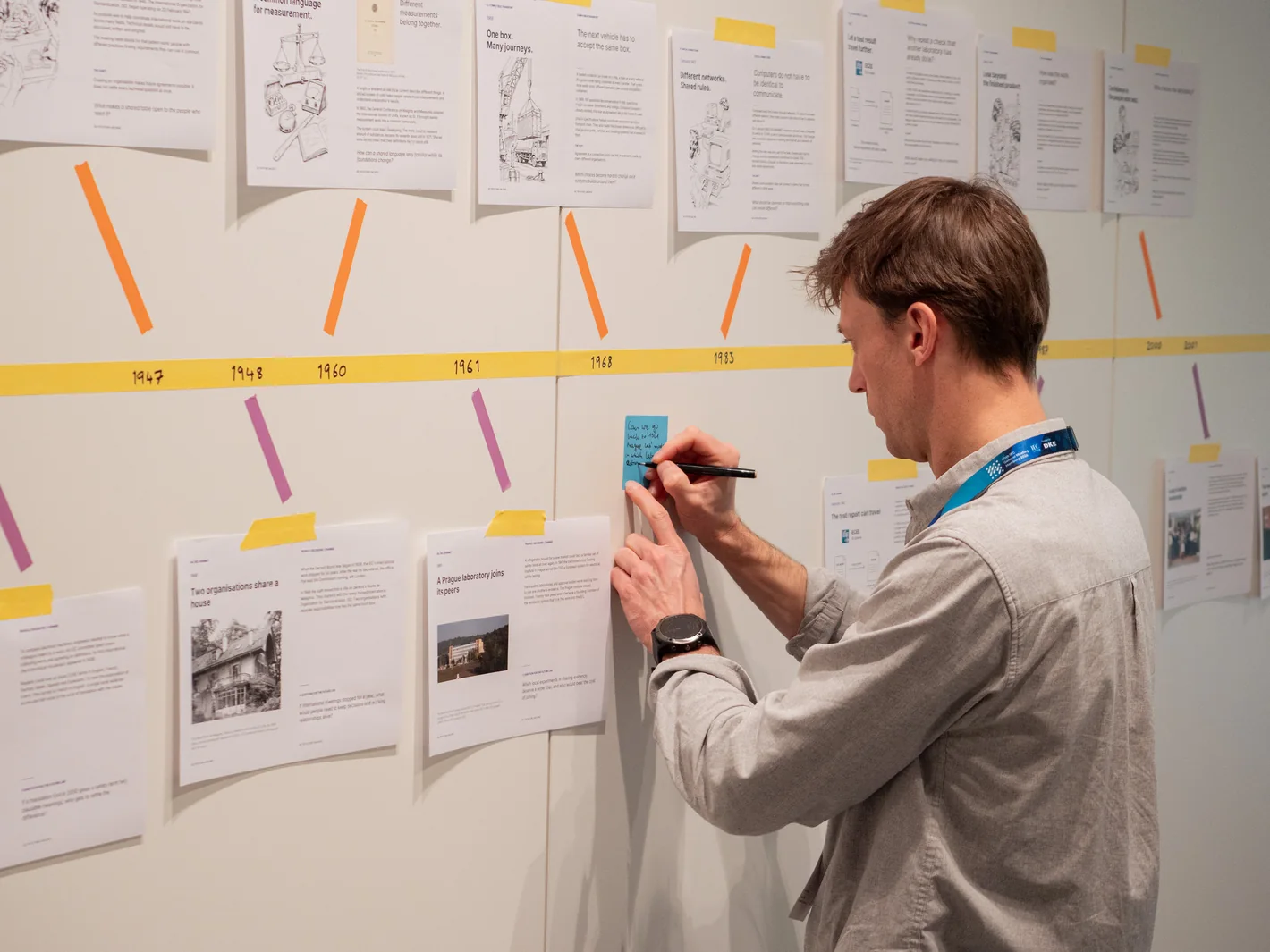
Station 8 · Corridor wall
History of IEC and Standardization
How did standardization and the IEC develop, and what can their histories help us question about the future?
Making things agree · How the IEC learned to change
Photo © WorkPlayExperience
Where the 122 cards came from
The seven table stations opened with 84 research cards, 12 per station, plus 29 cards drawn from participants’ Basecamp preparation. Together these made 113 opening cards.
The team added 3 cards from World Café discussions and 6 from interviews. The 43 saved ideation stacks document 45 distinct research cards, 21 participant cards and all three World Café additions. Use of the interview cards in those rounds remains unconfirmed.