How we worked
From preparation to prototypes
The work began before Hamburg. Here is how participants brought local experience to the table, explored across research themes and tested their ideas with people outside the room.
Before Hamburg
Two ramp-ups and local research
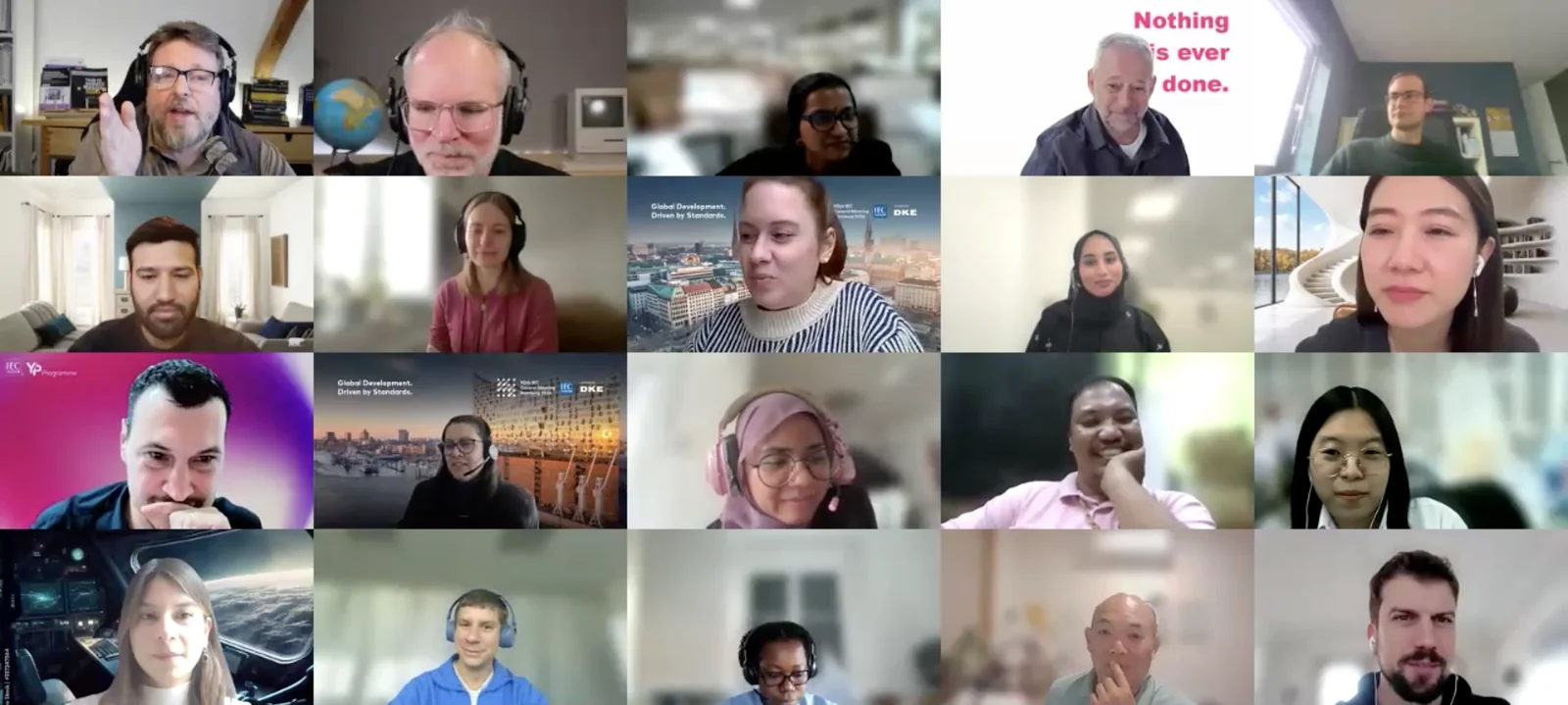
Two online sessions helped frame the work. Participants gathered perspectives and posted contributions on Basecamp. The team combined that preparation with desk research and turned it into conversation starters for Hamburg.
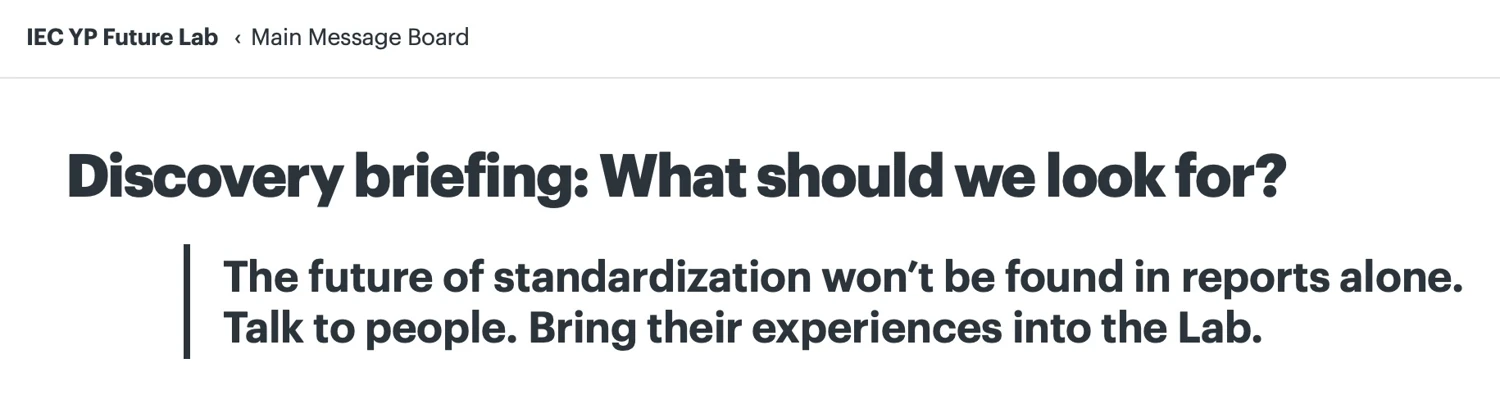
“Talk to people. Bring their experiences into the Lab.”

Tuesday · Immersion
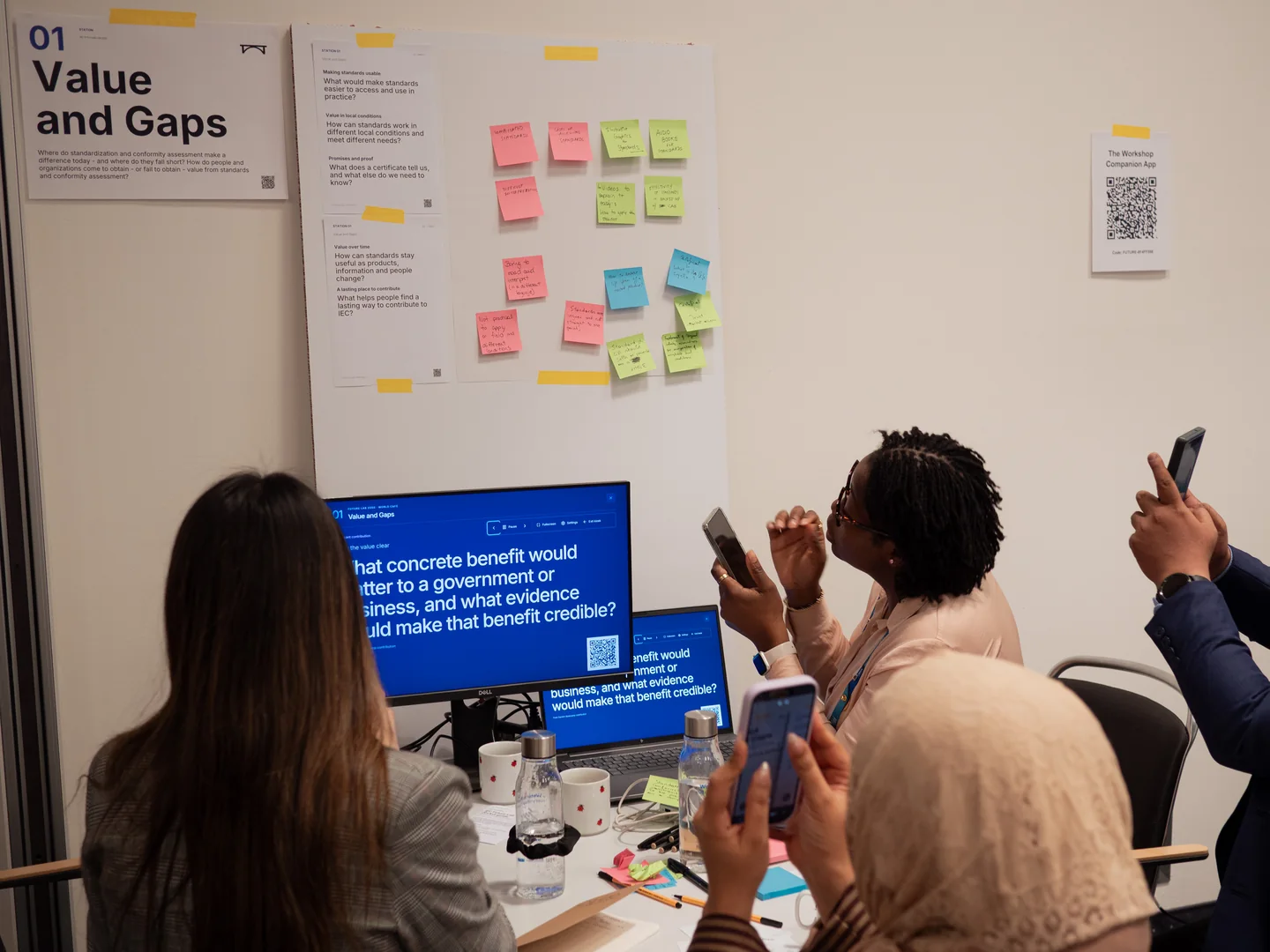
Eight World Café stations
Seven themed stations held 12 research cards apiece, alongside 29 participant-contributed cards distributed across the tables. The eighth station occupied the corridor. Teams moved between topics, discussed questions and left responses on the boards.
Tuesday · Gathering evidence
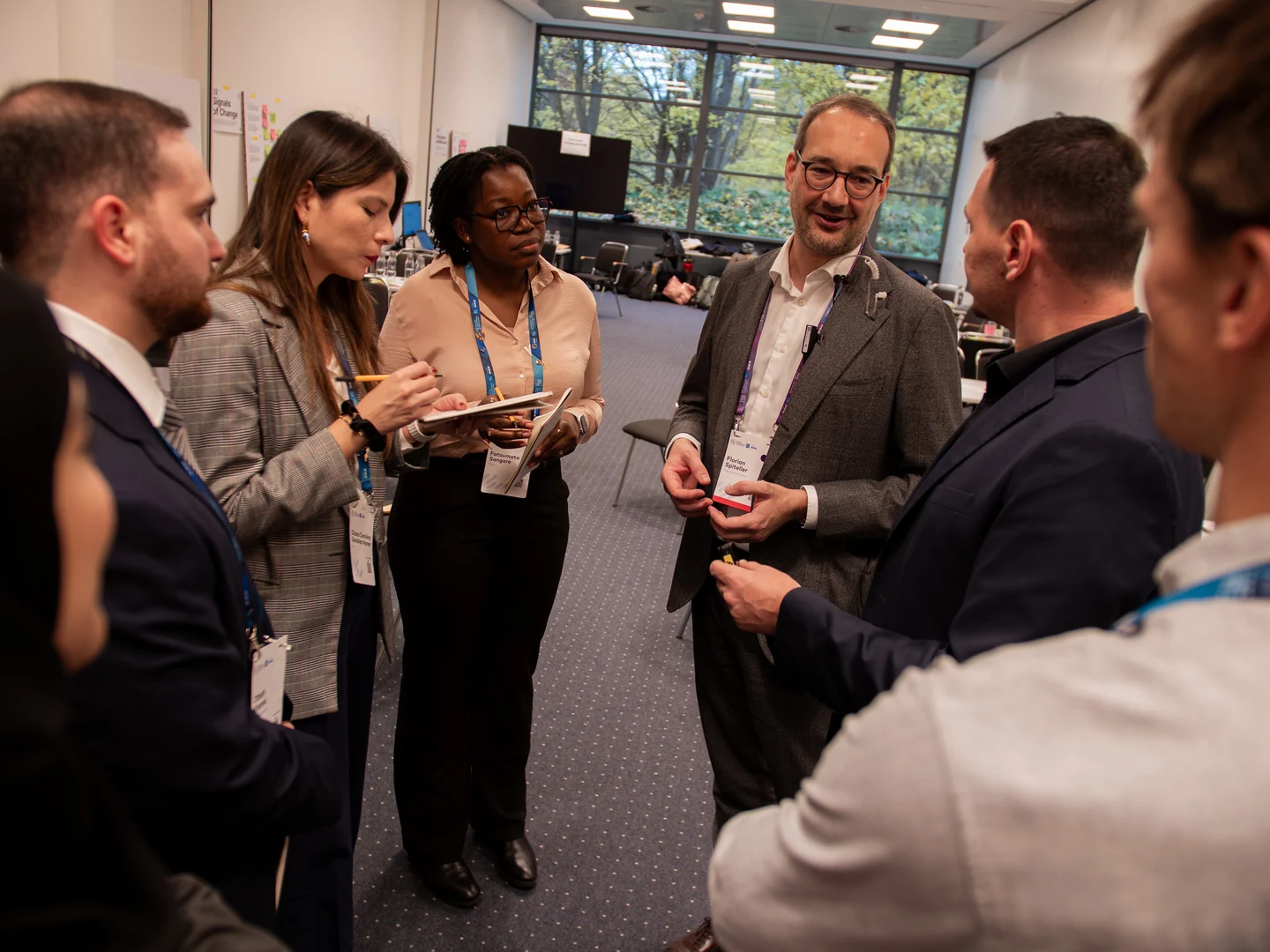
Interviews and new questions
Interview rounds added perspectives from outside the working teams. Three insight cards came from the World Café and six from interviews. The original prompts, participant contributions and new insights can each be explored in the collection.
- World Café insight · WC-INS-02
- Who will learn to challenge the AI?
- Interview insight · INT-INS-01
- Who is responsible for the standards app?
Tuesday · Ideation
Change partners and cross themes
Participants changed partners and worked with different prompts. They wrote ideas on paper and clustered them. The saved stacks show which starting cards travelled together and which ideas came out of each round.
136 handwritten cards across 43 team stacks
149 ideas in the edited catalogue
Wednesday · Early probes
Make a rough first draft
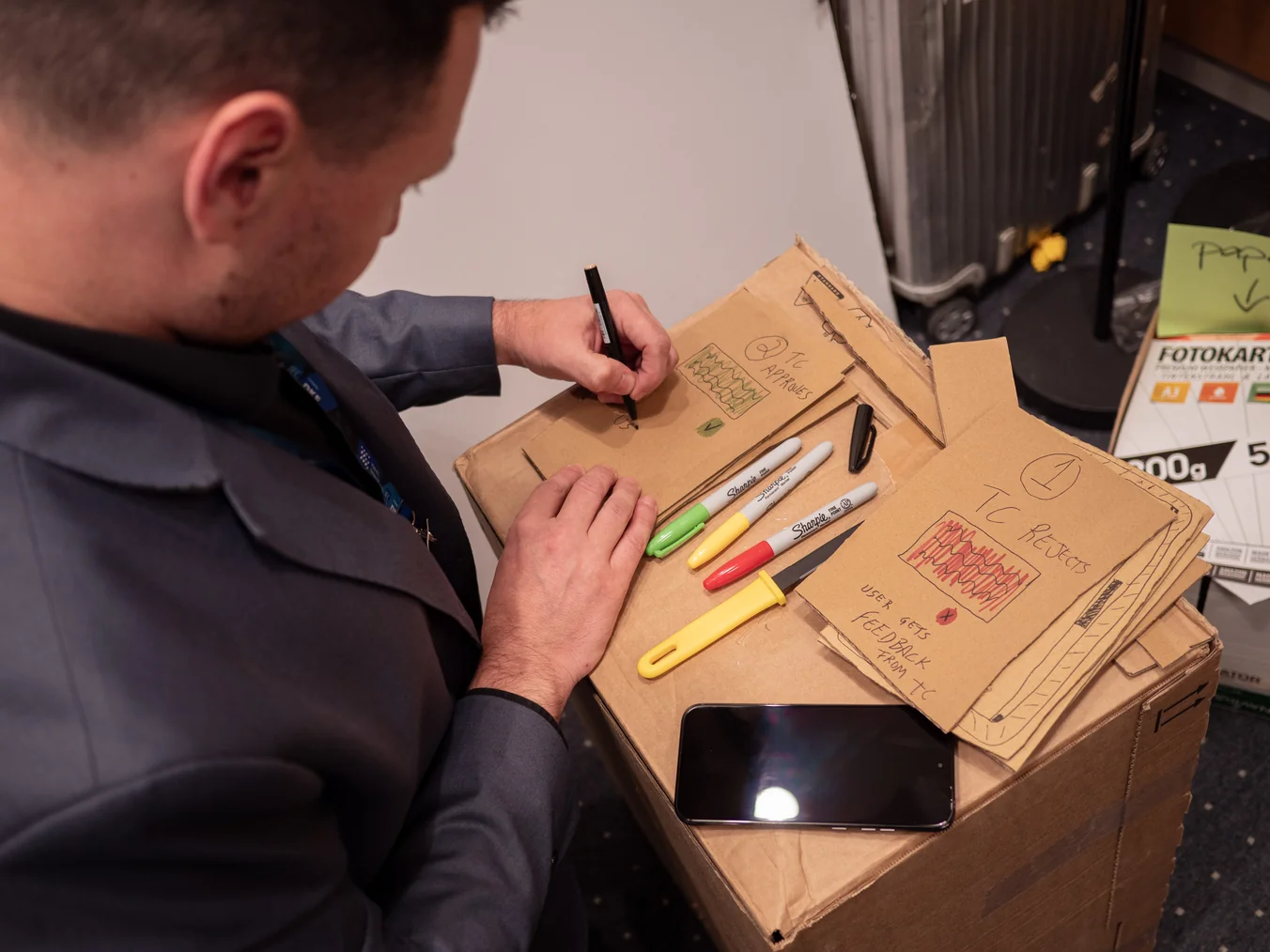
Teams made several directions tangible with sketches, storyboards and enactments. They presented 27 early concepts and used those first drafts to find out what other people understood, challenged or wanted to try.
Thursday · Testing and revision
Take the work outside the room
Nine teams developed projects. They showed prototypes to delegates, compared reactions, chose what to change and recorded remaining questions. The project pages preserve the feedback and revisions the teams documented.
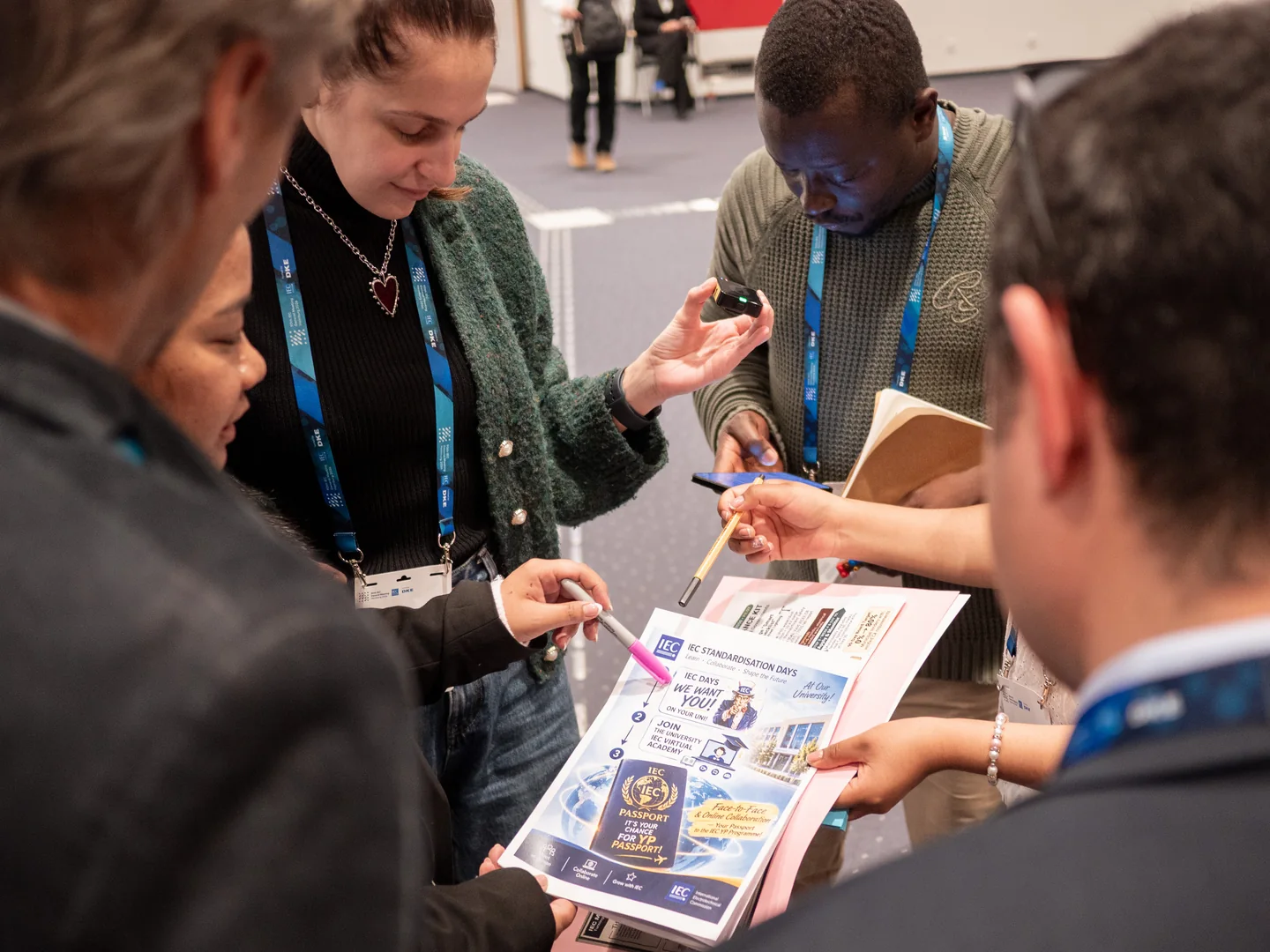
Wednesday, 18 November 2026 · A team discusses its printed “IEC Standardisation Days” concept with delegates outside the Lab. · © WorkPlayExperience
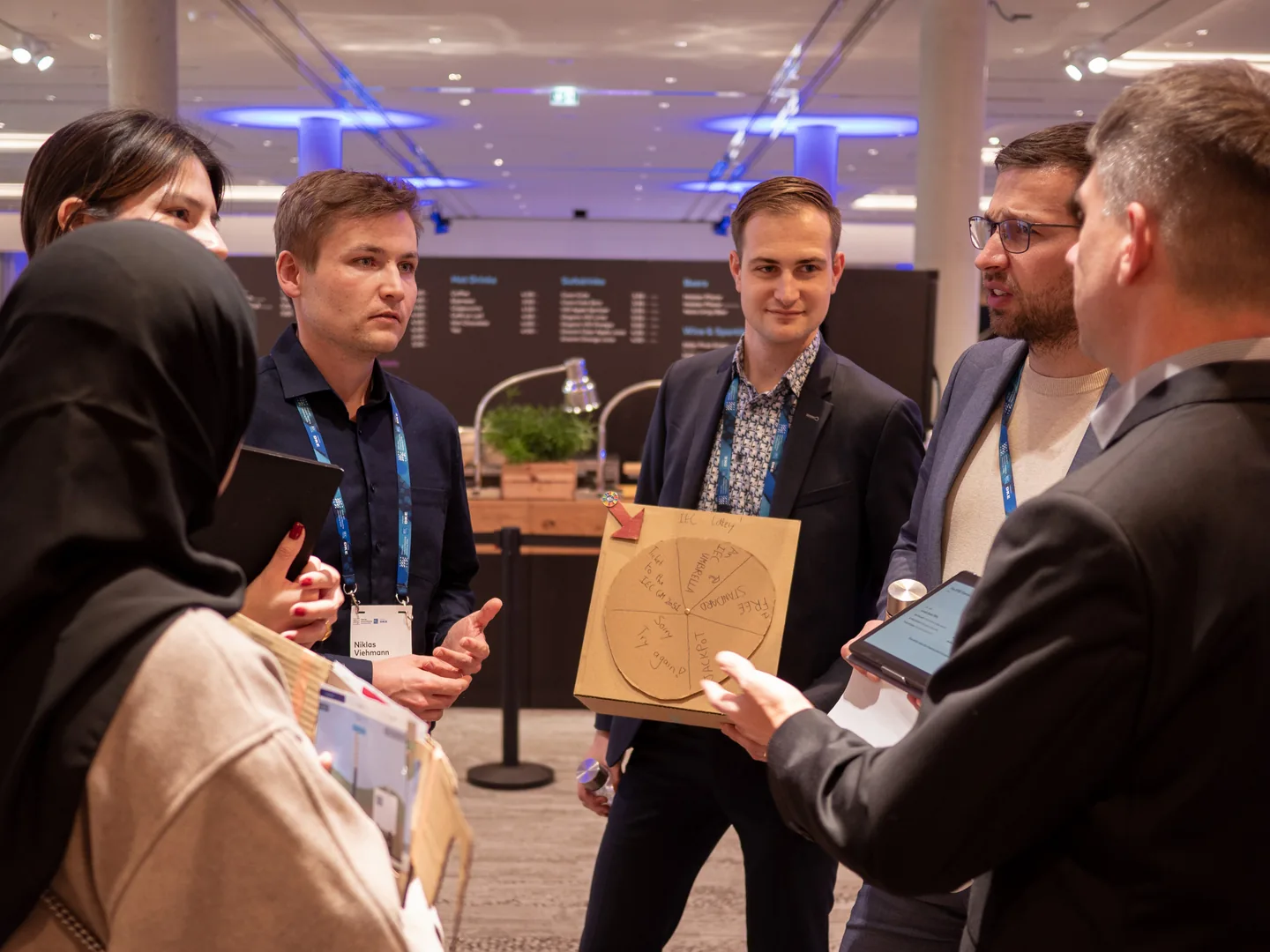
Wednesday, 18 November 2026 · A team shows its cardboard wheel prototype to delegates in the foyer. · © WorkPlayExperience
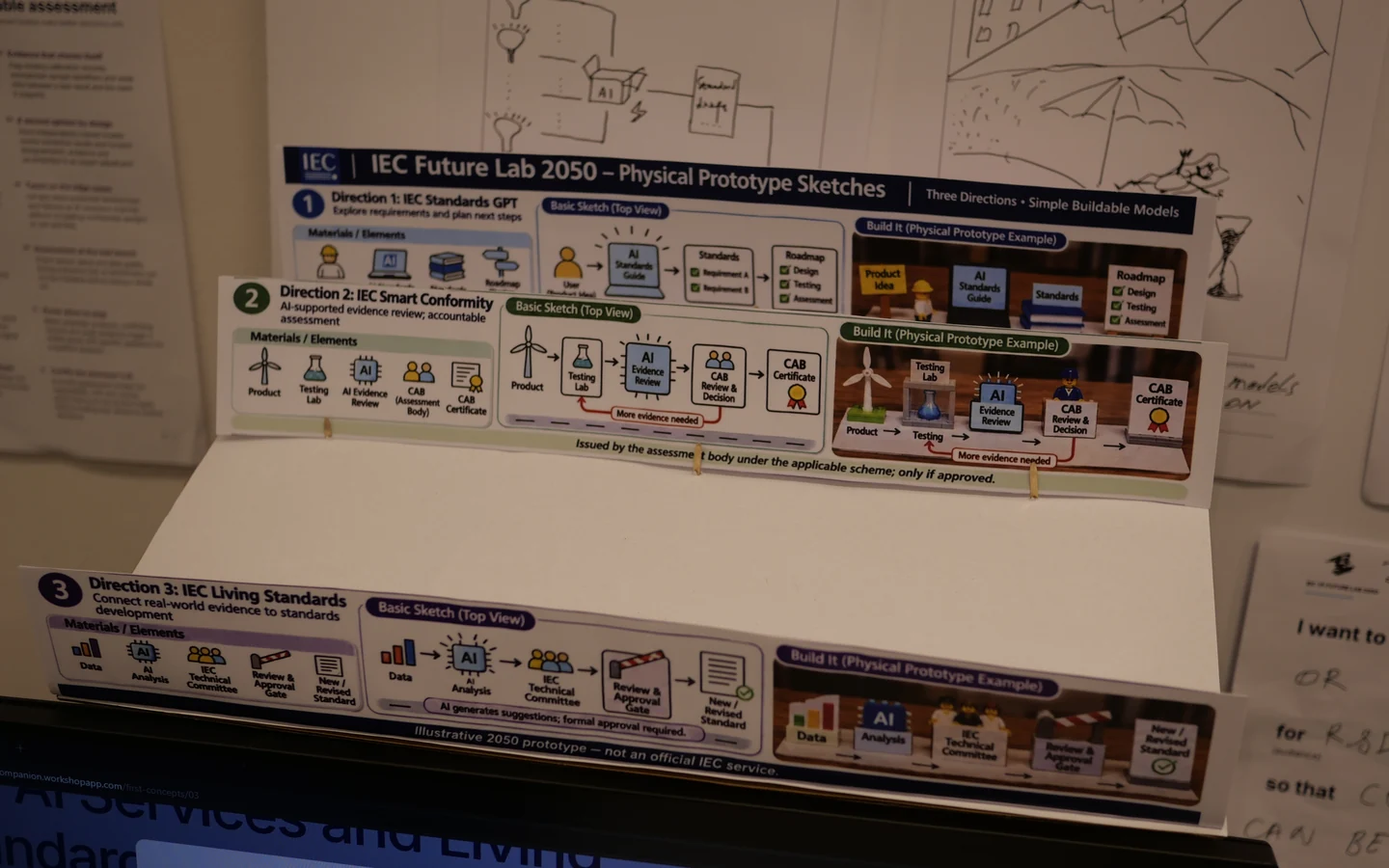
Thursday, 19 November 2026 · Team 3’s three early prototype sketches on display, with IEC Living Standards in the front row. · © WorkPlayExperience
After delegate feedback
Controlled accessProtect confidential data. Authorise its use and anonymise it where appropriate.
Expert reviewIEC technical experts check the evidence and decide whether to propose a review.
Friday · General Assembly
Project the work into the future
Seven imagined headlines gave the teams’ work a possible place between Hamburg and 2050. The presentation connected projects through three directions and invited the Assembly to add its own question about courage and change.
- 2028Committee performance support kicks off
- 2028IEC product database goes live: verification in one scan
- 2031Field data informs a standard’s environmental requirements
- 2032Small businesses help shape IEC standards
- 2035Compliance Companion guides products into new markets
- 2035IEC launches standards reviews informed by field evidence
- 2040IEC issues its first licence for individual standards clauses
What teams produced
Participants used cards drawn from desk research and their Basecamp posts to start conversations at the World Café tables. The team added cards when those conversations and interviews raised new questions or sharpened existing ones, bringing the set to 122 source cards.
The edited Day 1 catalogue records 149 initial idea sketches from 136 handwritten cards in 43 team stacks. Participants presented 27 early concepts on Wednesday and developed 9 team projects by Thursday. Friday’s presentation drew on their work to explore 7 possible futures and 3 core directions.
Browse the materials