Table 1 · Developed project · Thursday
Conformity Assessment Twin
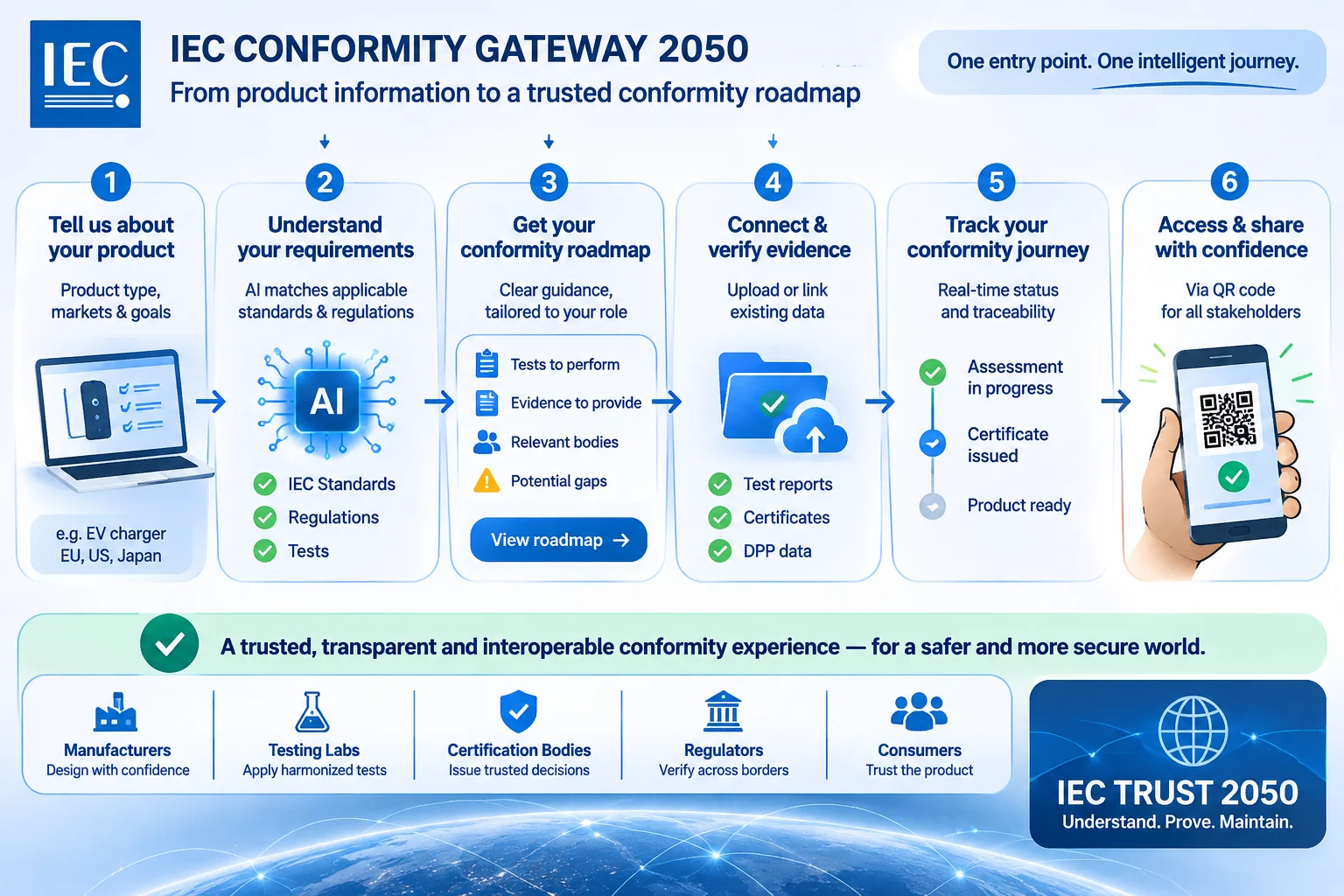
A manufacturer and a test laboratory need different things from the same product record. The team’s Gateway storyboard starts with a product and its markets, finds the requirements and lays out the tests. Its Conformity Assessment Twin then gives each participant access to the evidence appropriate to their role.
What the team learned
A test-lab expert suggested carrying supplier information into the laboratory with a product key.
Wednesday · 18 November
Three early concepts
Conformity Train connected a standard with its tests and evidence. A manufacturer chatbot started with a product question. A product key let a laboratory retrieve the supplier’s record.
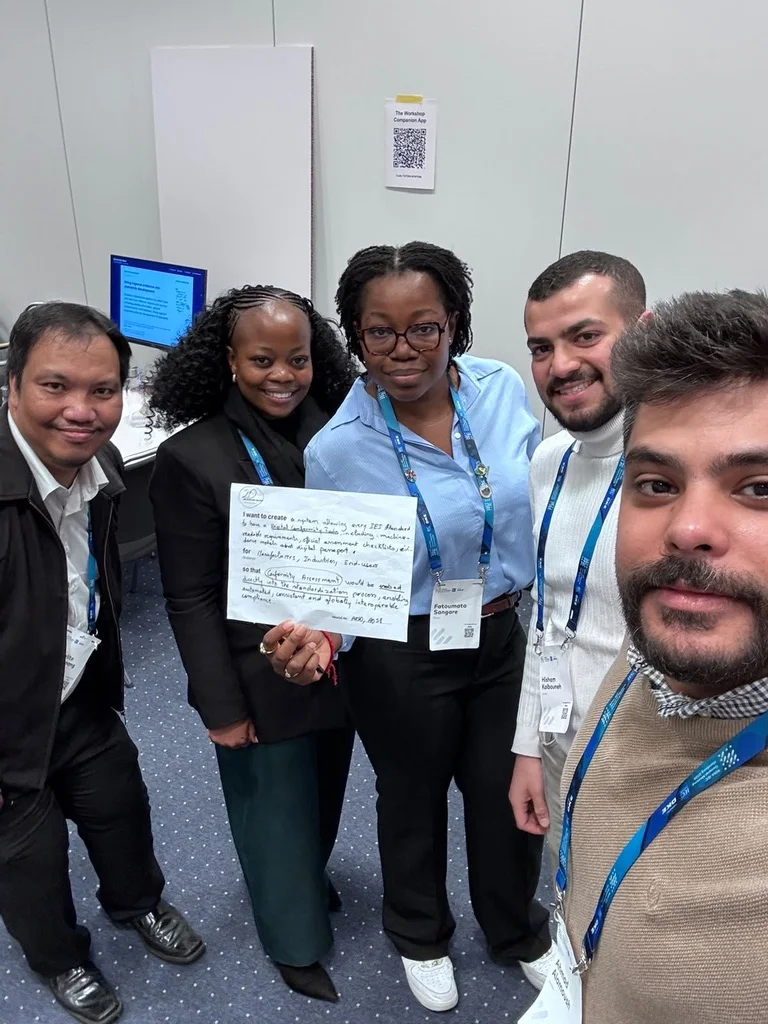
Archive ID 02.1
Conformity Train
Put the conformity assessment path alongside the standard it depends on. A manufacturer or test lab can spend time finding the applicable standard, then separately working out what proof and tests are needed. The team proposed an entry point for conformity work alongside the IEC’s SMART standards effort.
How the concept could work
- Start with a selected standard.
- Open the related conformity assessment requirements and see how compliance can be demonstrated.
- Translate the requirements into the evidence to prepare and the work a laboratory or engineer has to do.
Feedback and discussion
In a closely related test, a reviewer wanted the EV charging checklist to link to referenced tests and show local deviations and traceable reports. The recording does not identify which team ran this test.
Discussion question
Who would maintain the links between editions, referenced standards, tests and evidence, and how would a lab see that one of them changed?
Archive ID 02.2
Manufacturer chatbot
Help a manufacturer turn a product question into a standards and evidence checklist. A manufacturer can describe what it wants to build without knowing the full set of standards around it. The team’s example was a company starting work on a coffee machine.
How the concept could work
- Ask a plain-language question about the product and what has to be done.
- Identify applicable standards and requirements and show how they fit together.
- Explain what proof a test lab would likely need so the manufacturer can start preparing it.
Feedback and discussion
A related manufacturer-view test raised the need to start with a product problem and find the whole family of relevant standards. The recording does not identify the team. The chatbot itself was presented in the pitch.
Discussion question
What product details would the chatbot need to ask for before it can give a reliable answer, and how would it show uncertainty about scope?
Archive ID 02.3
Product key for test labs
Give a test engineer a way to retrieve supplier information at the point of testing. A lab preparing to test a product needs the right supplier information for that particular item or model. In the final pitch, a coffee machine provided the example and a test-lab expert was credited with suggesting the key.
How the concept could work
- A supplier provides the information the lab will need and associates it with the product.
- A test engineer scans a QR code or reads a physical or virtual key. The team left the carrier open.
- The engineer retrieves the supplier’s information and uses it to prepare the test.
Feedback and discussion
A related test discussed tracing a replacement relay to the correct serial numbers. The recording does not identify the team. The product key proposed in the pitch would need to preserve this kind of version history.
Discussion question
Should the key resolve to a model, batch or individual unit, and who would record and verify product changes?
Thursday · 19 November
Testing and revisions
What the team heard
A test-lab expert suggested carrying supplier information into the laboratory with a product key. The team considered both a digital key and a QR code.
What changed
The Thursday prototype gave different roles different views of the same evidence. A laboratory could protect its reports and a manufacturer could protect its intellectual property.
Questions still open
How could users search for the relevant requirements for their role?
Which additional markets and standards would the team need to include?
Friday · 20 November