Table 6 · Developed project · Thursday
IEC Academic Pathway
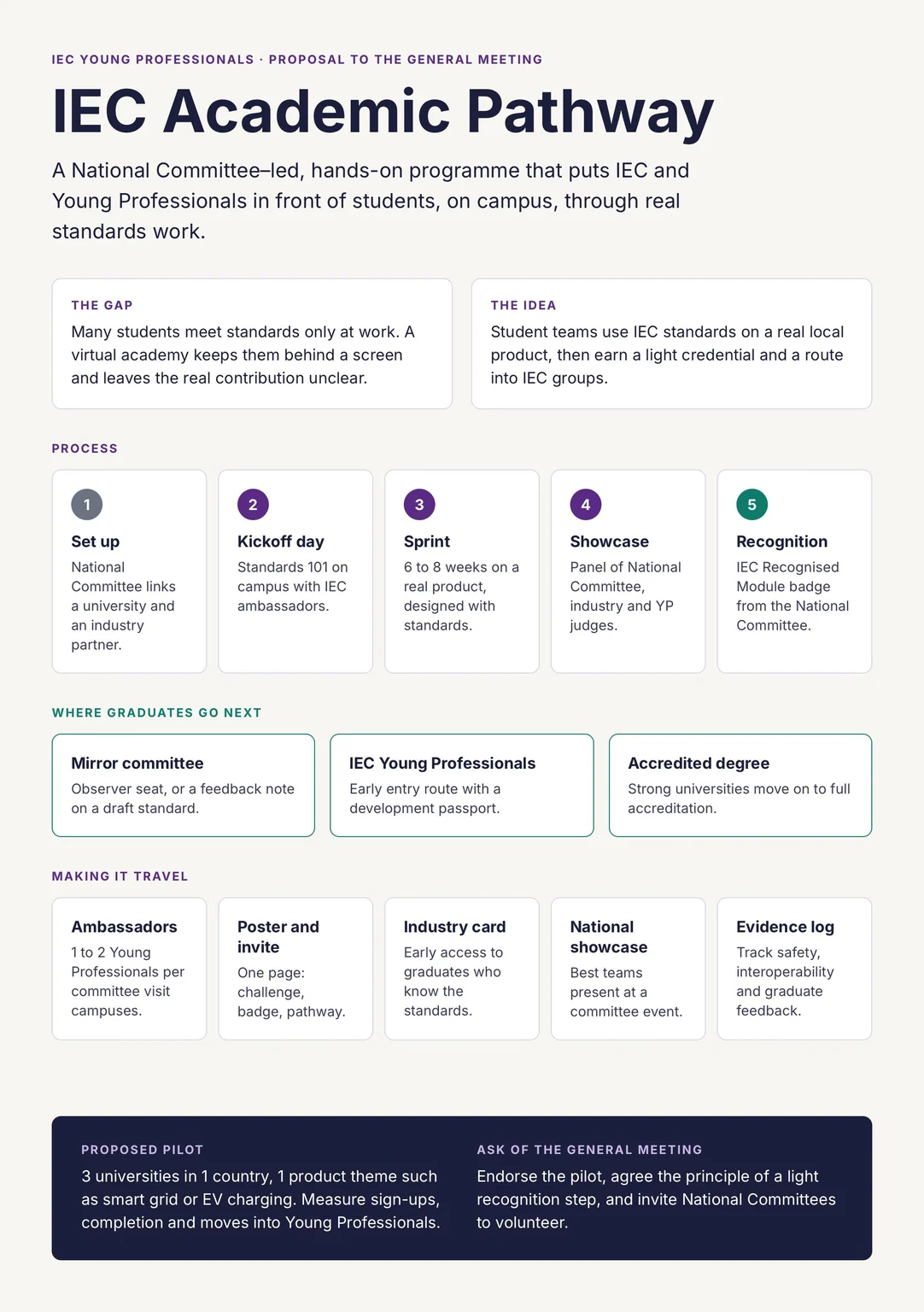
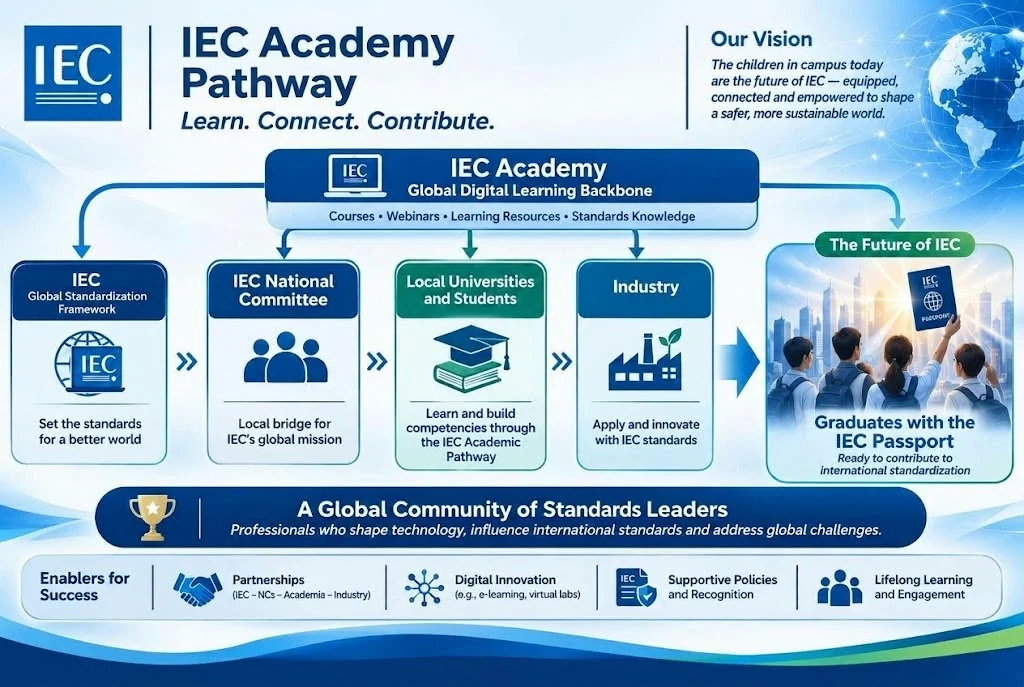
A National Committee brings a university and an industry partner together around a real product challenge. Over six to eight weeks, students apply standards, present their work and earn recognition. Observing a national mirror committee or commenting on a draft would give the project a concrete next step.
What the team learned
Reviewers wanted a practical local problem and a clear role for students after training.
Wednesday · 18 November
Three early concepts
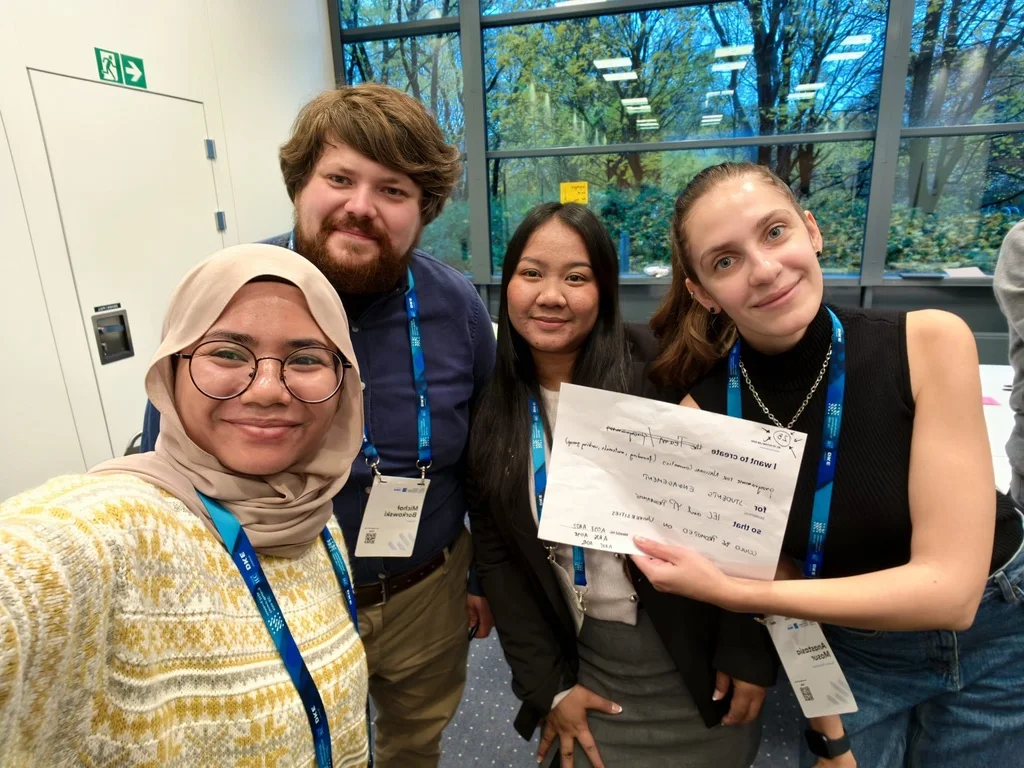
The team explored a local Virtual Academy, a municipal and campus challenge, and IEC-accredited study programmes. Its campus materials also included Standardisation Days and a development passport.
Archive ID 09.1
IEC Virtual Academy
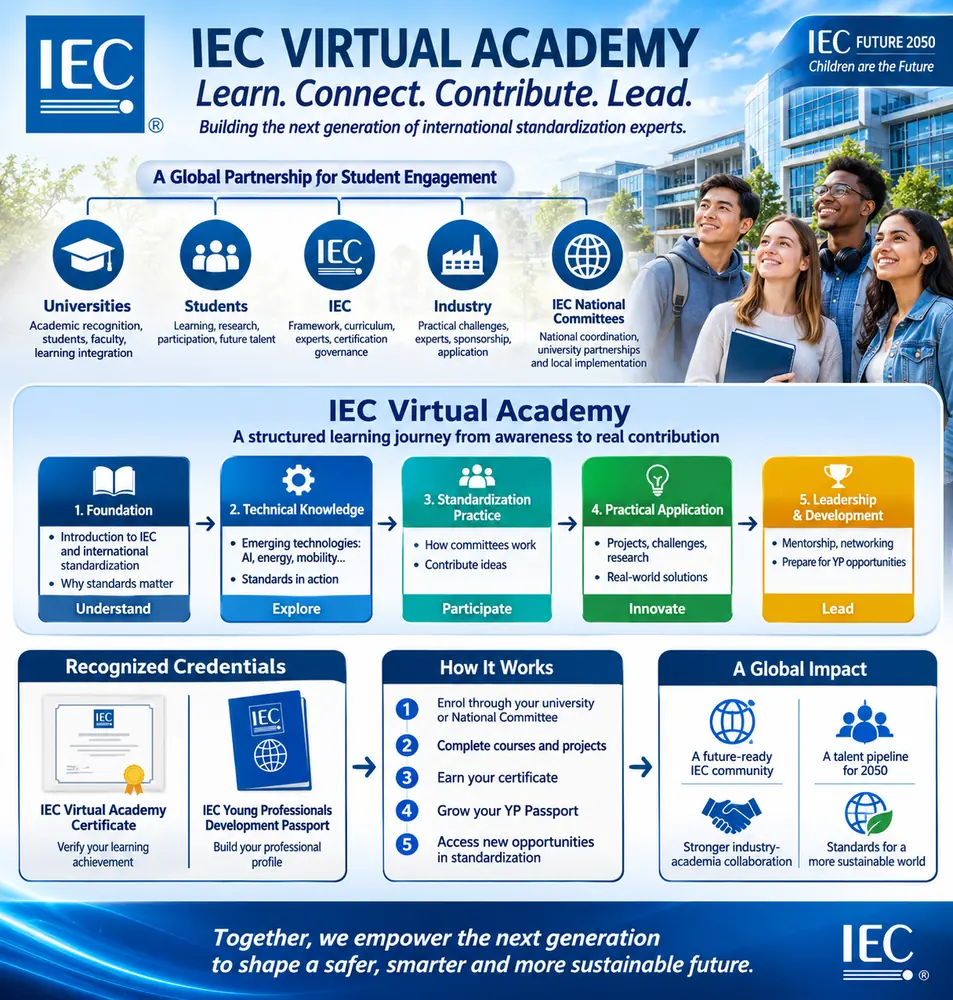
Offer students a local route into hands-on standards work while they are still at university. Students outside some electrical engineering programmes may first encounter standards at work. The team proposed a university-facing academy coordinated locally by National Committees.
How the concept could work
- Establish a partnership among the IEC and its National Committee, universities and students, and industry. Have the National Committee validate local delivery.
- Move through foundations, technical knowledge, standardization practice and applied projects, followed by leadership and mentoring.
- Award a learning credential and connect graduates to an early opportunity to contribute.
Feedback and discussion
The mock-up pairs a certificate and development passport with preparation for Young Professionals opportunities. An interview reviewer asked what students should actually join and suggested practical challenges. The final pitch envisaged an early entry route whose exact destination is unclear in the recording.
Discussion question
What real contribution would a student be ready to make on completion, and which IEC group could offer that opportunity?
Archive ID 09.2
Municipal and Campus Compliance Kit
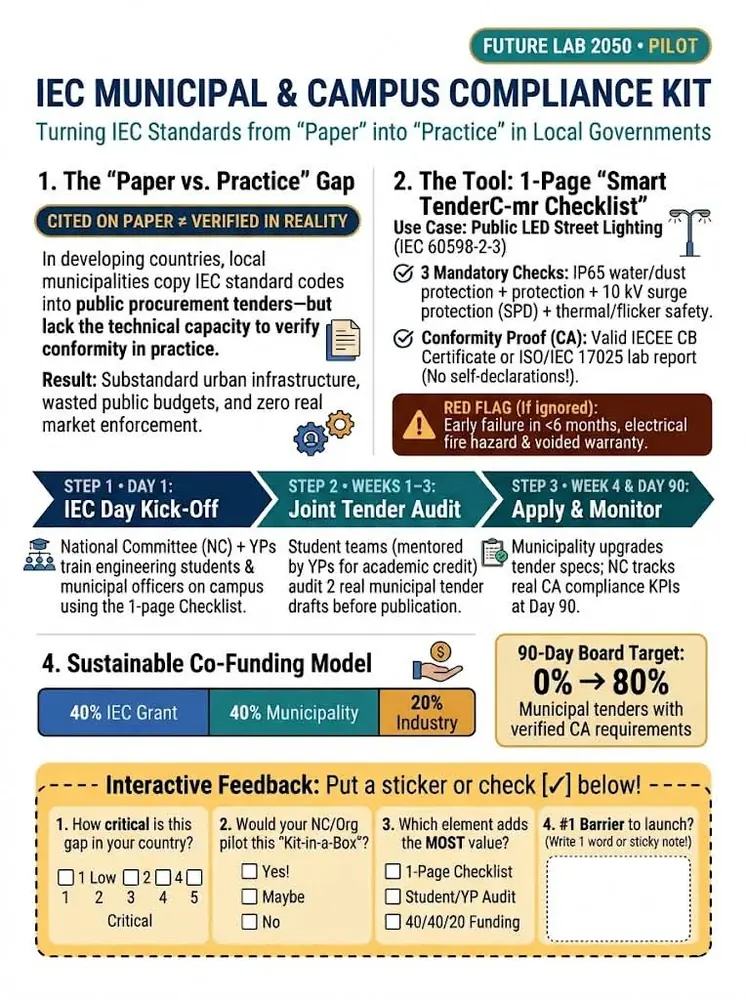
Let students practise standards work on a real municipal procurement problem. Municipalities can cite standards in tenders and still lack a way to check the evidence. A boot camp brings students, National Committees and municipal staff together around a live case.
How the concept could work
- Have a National Committee and Young Professionals introduce the relevant standards with a one-page tender checklist.
- Let student teams and practitioners work on a live municipal case, such as public LED street lighting.
- Bring municipal staff into the discussion. Use a fourth session as a challenge or hackathon, with an audit and follow-up in the mock-up.
Feedback and discussion
The prototype shows a tender checklist and a 90-day follow-up. Test reviewers wanted a specific local problem that mattered to students and a shorter meeting for busy municipal staff. The final pitch kept four sessions.
Discussion question
Which municipality and upcoming tender would give students a real decision to work on and officials a reason to use the result?
Archive ID 09.3
IEC-accredited study programmes
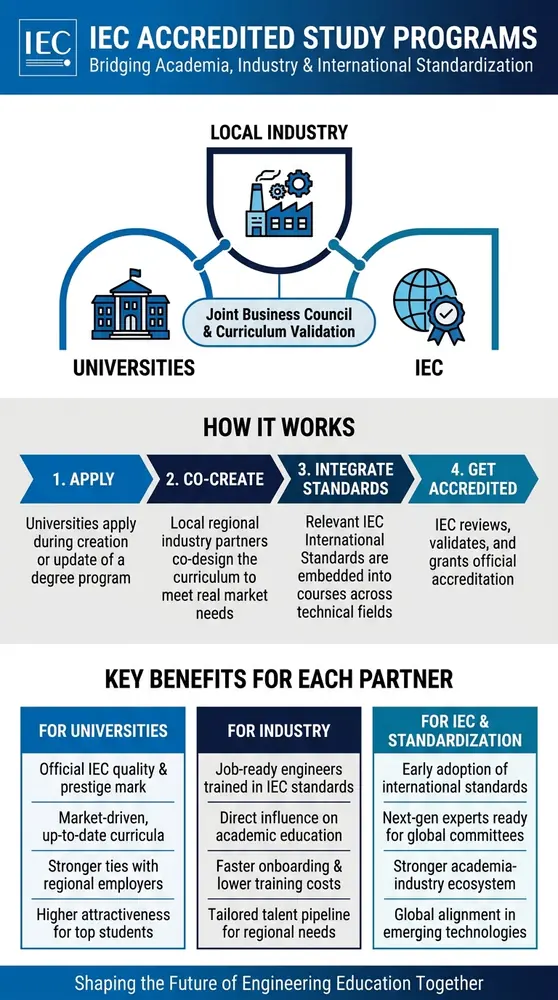
Build the use of IEC standards into university degrees co-designed with local industry. Graduates can enter technical work without practice using the standards they will encounter. The proposal gives universities and employers a way to build that experience into existing or new bachelor’s and master’s programmes.
How the concept could work
- Have a university and local industry partner identify the standards and practical capabilities relevant to the discipline.
- Integrate the standards into existing modules and project work, or co-design a programme around them.
- Submit the programme for the proposed IEC review and accreditation.
Feedback and discussion
The poster shows university application, industry co-design, curriculum integration and IEC review. A reviewer questioned whether formal accreditation was necessary and suggested starting from a product or system, such as a smart grid, to teach safety, performance and interoperability through design.
Discussion question
Would an IEC programme credential improve outcomes beyond a practical standards module, and what evidence should a university have to provide?
Thursday · 19 November
Testing and revisions
What the team heard
Reviewers wanted a practical local problem and a clear role for students after training. A reviewer suggested teaching through product design and questioned the need for formal accreditation.
What changed
The Academic Pathway poster specified a six-to-eight-week challenge, a National Committee badge and opportunities to observe a committee or contribute feedback. Its pilot covered one product theme at three universities in one country.
Another view of the prototype
Questions still open
Who recognises a student’s work, and which participation opportunity can the National Committee offer after the showcase?