20 May 2019Making things agree
A kilogram without a master weight.
For more than a century, one metal cylinder kept near Paris defined the kilogram. Other weights were compared with it.
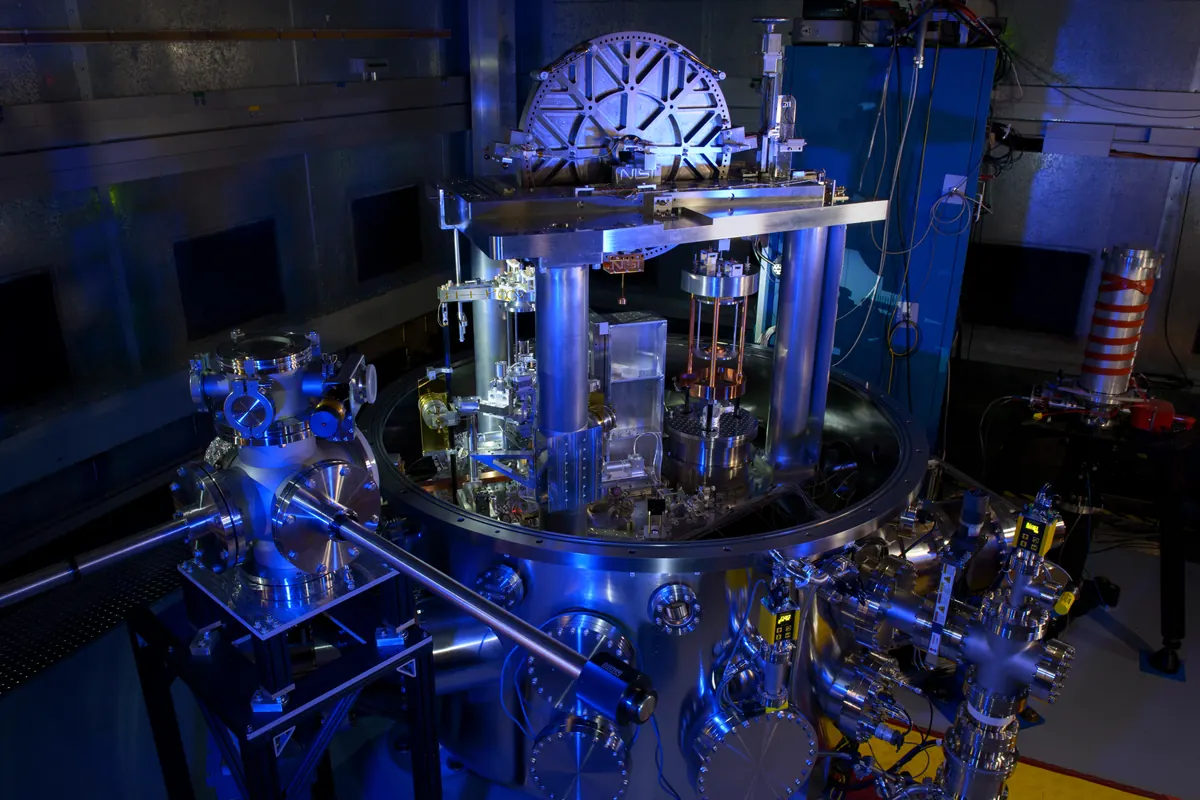
On 20 May 2019, the definition changed. It now uses a constant of nature, called the Planck constant. The machine above balances the pull of gravity on a mass with an electrical force. Careful measurements connect the result to that constant.
A kilogram did not become heavier or lighter. Laboratories gained a way to determine it through repeatable experiments, without depending on one unique object.
What else could we agree on without relying on one master copy?
Full exhibit and sources
